March 8, 2011
The Information, written by James Gleick, covers nearly everything — jungle drums, language, Morse code, telegraphy, telephony, quantum mechanics, thermodynamics, genetics and more — as it relates to information, which he describes as the "fundamental core of things." Information theory can now be seen as the overarching concept for our times, describing how scientists in many disciplines see a common thread to their work.
Gleick's book spans centuries and geographic locations, but one person stays throughout the story for almost 400 pages: Claude Shannon, an engineer and mathematician who worked at Bell Labs in the mid-20th century. Shannon created what is now called information theory, Gleick tells Robert Siegel on All Things Considered:
"He was the first person to use the word 'bit' as a scientific unit of measuring this funny abstract thing that until this point in time scientists had not thought of as a measurable scientific quantity."
Bits are more commonly recognized as the 1s and 0s that enable computers to store and share information, but can also be thought of in this context as a yes/no, either/or or on/off switch. Gleick describes the bit as "the irreducible quantum of information," upon which all things are built.
Just like Isaac Newton took vague words like "force" and "mass" that had fuzzy contemporary meanings and turned them into specific mathematical definitions, "information" now can refer to a specific scientific definition similar to a bit.
"Binary yes or no choices are at the root of things," Gleick explains. The physicist John Archibald Wheeler coined an epigram to encapsulate the concept behind information theory: "It from bit." It described the idea that the smallest particle of every piece of matter is a binary question, a 1 or a 0. From these pieces of information, other things could develop — like DNA, matter and living organisms. The field of information theory, in addition to creating new meanings for words like "information," also builds upon knowledge from other scientific disciplines such as thermodynamics, even though the result may be a little tough to understand.
James Gleick also wrote Chaos: Making a New Science, which popularized the idea of the butterfly effect. His books have been finalists for the Pulitzer Prize and the National Book Award.
Phylis Rose
James Gleick also wrote Chaos: Making a New Science, which popularized the idea of the butterfly effect. His books have been finalists for the Pulitzer Prize and the National Book Award.
"When Claude Shannon first wrote his paper and made a connection between information and the thermodynamic concept of entropy, a rumor started around Bell Labs that the great atomic physicist John von Neumann had suggested to Shannon, 'Just use the word entropy — no one will know what you're talking about, and everyone will be scared to doubt you.' "
Though it may be a difficult subject to conceptualize, entropy does have a deep connection to information science, Gleick says. Entropy is associated with disorder in thermodynamic systems, and analogously so in informational systems. Though it may seem paradoxical to link information to disorder, Gleick explains that each new bit of information is a surprise — if you knew what a particular message contained, there would not be information in it.
"Information equals disorder, disorder equals entropy and a lot of physicists have been both scratching their heads and making scientific progress ever since," Gleick says.
In the everyday — not scientific — sense, an object like the moon only seems to contain information when we perceive it and develop thoughts about it, whether that's the man in the moon, the moon being made of cheese or the moon driving people to madness. But Gleick says that even without our perceiving it, the moon is more than just matter — it still has its own bits of intrinsic information.
"It sounds mystical, and I can't pretend that I fully understand it either, but it's just one of the many ways in which scientists have discovered a conception of information that helps them solve problems in a whole range of disciplines."
We can see now that information is what our world runs on: the blood and the fuel, the vital principle. It pervades the sciences from top to bottom, transforming every branch of knowledge. Information theory began as a bridge from mathematics to electrical engineering and from there to computing. What English speakers call "computer science" Europeans have long since known as informatique, informatica, and Informatik. Now even biology has become an information science, a subject of messages, instructions, and code. Genes encapsulate information and enable procedures for reading it in and writing it out. Life spreads by networking. The body itself is an information processor. Memory is stored not just in brains but in every cell. No wonder genetics bloomed along with information theory. DNA is the quintessential information molecule, the most advanced message processor at the cellular level—an alphabet and a code, 6 billion bits to form a human being. "What lies at the heart of every living thing is not a fire, not warm breath, not a 'spark of life,'" declares the evolutionary theorist Richard Dawkins. "It is information, words, instructions. . . . If you want to understand life, don't think about vibrant, throbbing gels and oozes, think about information technology." The cells of an organism are nodes in a richly interwoven communications network, transmitting and receiving, coding and decoding. Evolution itself embodies an ongoing exchange of information between organism and environment.
"The information circle becomes the unit of life," says Werner Loewenstein after thirty years spent studying intercellular communication. He reminds us that information means something deeper now: "It connotes a cosmic principle of organization and order, and it provides an exact measure of that." The gene has its cultural analog, too: the meme. In cultural evolution, a meme is a replicator and propagator—an idea, a fashion, a chain letter, or a conspiracy theory. On a bad day, a meme is a virus.

Showing posts with label information entropy. Show all posts
Showing posts with label information entropy. Show all posts
Bit By Bit, 'The Information' Reveals Everything
http://www.npr.org/player/v2/mediaPlayer.html?action=1&t=1&islist=false&id=134366651&m=134371366
Organization theory and Claude Shannon
Organization theory
In 1988, on the basis of Shannon's definition of statistical entropy, Mario Ludovico[19] gave a formal definition of sintropy, as a measurement of the degree of organization internal to any system formed by interacting components. According to that definition, sintropy is a quantity complementary to entropy. The sum of the two quantities defines a constant value, specific of the system of which that constant value identifies the transformation potential. By use of such definitions, the theory develops equations apt to describe/simulate any possible evolution of the system, either toward higher/lower levels of "internal organization" (i.e., sintropy) or toward the system's collapse.http://en.wikipedia.org/wiki/Negentropy
SONNY BOB HYPERSHARING LANGUAGE VS. THE EQUATION.
RAW Sharing:
Robert Anton Wilson...
Top of my list of great heroes,
And he shared a wiccan-warrior vision of internet as a
Global revolution,
F-e-e-d-b-a-c-k
Characters and equations
A tale of the tribe, new conversation
Language vs. The Equation.And he left us 36' books and 1000’s of articles
Maps and metaphor's for future circuits
Helping guide any thinking individual
Compelled to continue processing
The tale of the Tribe, maybelogic & RAW’s
Special language equations:
alphabet/ideogram
Joyce/Pound
Shannon/Mcluhan
TV/Internet.
A RAW internetwork of his quality critters,
Epic and Recyclopedic field of influence,
All-at-once when
Processed with the rhythm,
Surprise
LSD coated page-side bombs explode
Turning the flatted page into
hyperspace,
Radiating the readers consciousness
The page and – off – the page
into pypa-space.
Sharing Pound’s ‘Ideogramic method’
Sharing Joyce’s ‘Hologramic Prose & Epiphany & Finnegans Wake'
Sharing Bucky’s ‘Synergetics and Planetary design-science’
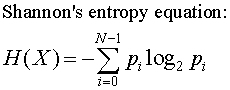
Sharing Shannon’s ‘Information Entropy and BITS’
Sharing Nietzsche’s ‘Eternal Return and influence upon Existentialism’
Sharing McLuhan’s ‘Global Village & The medium is the messsage'
Sharing Bruno’s ‘Pantheism and Decentralized Multiverse’
Sharing Vico’s ‘New Science & Ricorso’
Sharing Orson’s ‘Cinematic Methods’
Sharing Fenollosa’s ‘Chinese Written Character Poetry’
Sharing Yeats’s ‘Gyres, Symbolism & humanitarianism’
Sharing Gesell’s ‘Natural Economic Order'
Sharing Popper’s ‘Open Society'
Sharing Remy De Gournmont’s ‘Dissosociation of Ideas’
Sharing von Neumann’s ‘Theory of Games and Economic Behavior’
Sharing Leary’s ‘Eight Dimensional model of consciousness'
Sharing Reich’s ‘Bioenergetic Force’
Sharing Crowley’s ‘System of practical Magick’
Sharing Korzybski’s ‘General Semantics & English-prime’
Sharing Alfred Jarry’s ‘pataphysique’
RAW transfers a torrent of open ideas
Wrapped up in cutting satire, oozing Hilaritas
Sharing ideas that have shaped the 21st century,
The information radiates from his gestalt-texts
Although he is not here
to add further clarity & feedback
What he left still has the revolutionary potential -
A completed circuit of a perfected (life-work)
A Tale of the tribe, tied up with a Mobius
Spider-silk bow-tie.
Email to the Multiverse of Tweets
& Hyperverse Blogs of Great Old Hags &
Books by Pyrateas with
Links shared...
--Steve Fly.
Subscribe to:
Posts (Atom)